Chief Product Officer, International · Ray / ReactivePhone
International Driving Theory at Ray
As CPO, International, I took over Ray's driving-theory apps outside its home market when their economics could not support growth. I rebuilt analytics and monetization, made paid acquisition work again and scaled the business, with the UK as its largest market.
Constraint
The international apps earned mostly from advertising, so paid acquisition could not become a reliable growth engine
Key decisions
Make monetization measurable first, then improve it through a queue of experiments rather than one-off bets.
Outcome
International revenue ~8× from Q1 2022 to Q1 2023 · UK ~73% of it by April 2023
Context
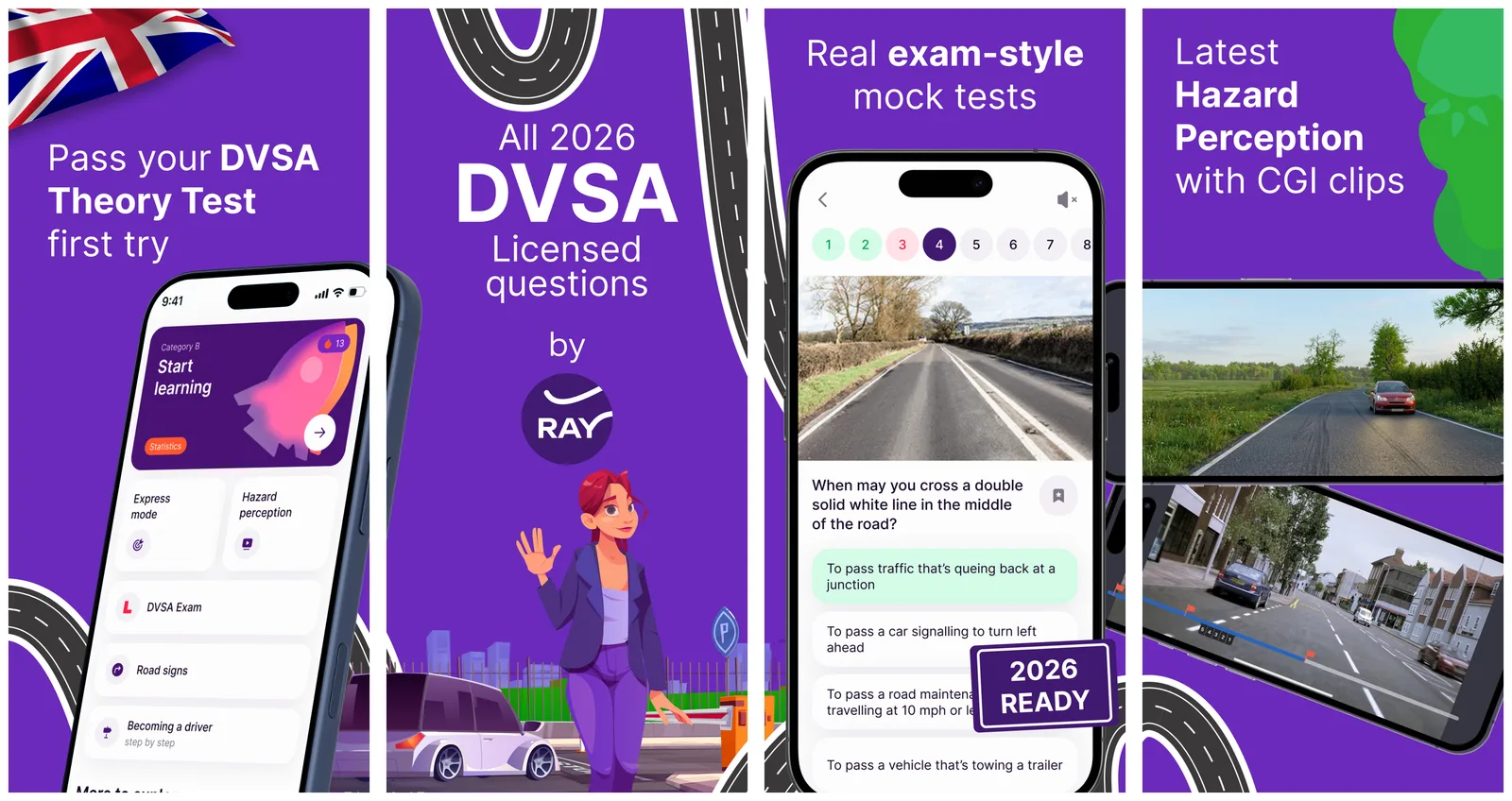
Ray / ReactivePhone makes mobile apps for drivers. I had worked with the company since 2019 as a part-time product manager, mostly on Smart Driver. In September 2021 the CEO asked me to take the CPO role for the international direction: the apps that prepare learner drivers for the theory exam in the UK and Poland, and later in Italy and France.
The constraint
The apps had users, but the business did not scale. At the start of 2022 advertising still brought in most of the revenue in both markets, and purchase conversion was weak. Without better monetization, paid acquisition could not become a reliable growth channel, and there was little traffic to test ideas on.
My role
I owned the direction's product strategy and results: analytics, monetization, experiments, market priorities and launches, with a cross-functional team whose engineering capacity was shared with other Ray products.
Key decisions
Make monetization measurable first, then improve it through a queue of experiments rather than one-off bets.
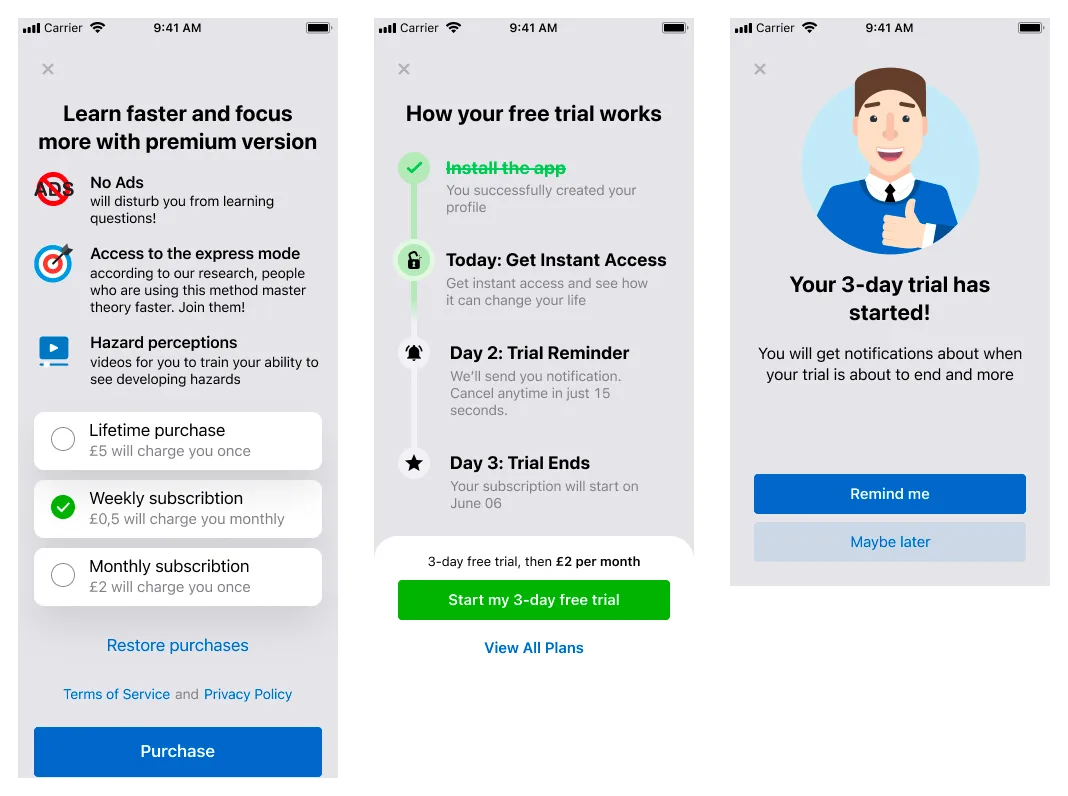
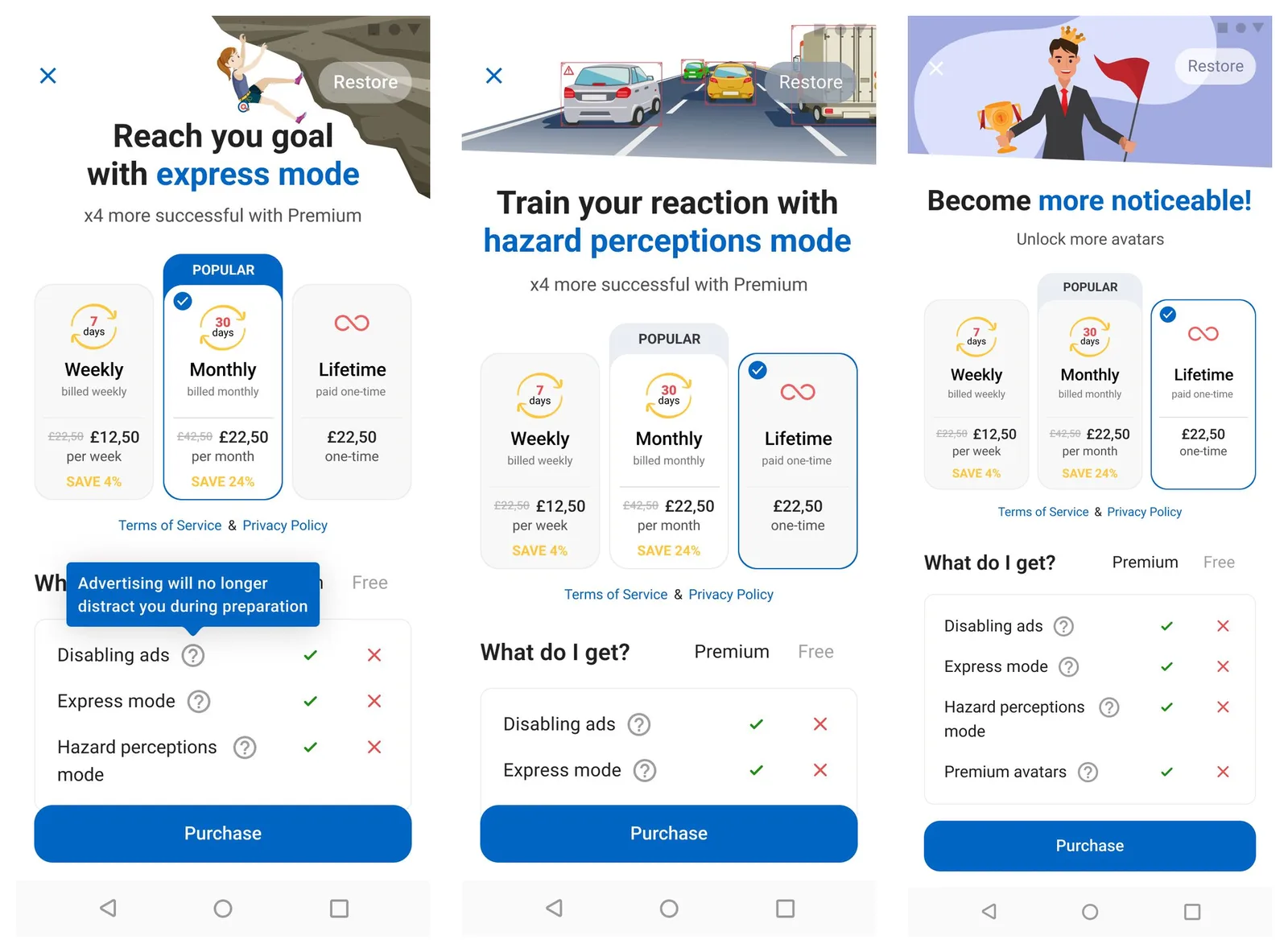
Move the apps from ad-funded economics to subscriptions, free trials and new purchase screens, and test prices.
Prove mechanics in one market, then roll them out to the others.
Restart paid acquisition only once conversion could support it, and put the scale behind the UK.
Take the product beyond mobile, to the web.
Look for the next business model beyond exam preparation.
Monetization engine
I rebuilt the product analytics in Amplitude so every step from install to purchase could be measured, took the obvious monetization gains first, and then set up a systematic A/B-testing programme. Every test had a market, a platform, a priority and the analytics property that split the variants, and results were reviewed at every sprint demo. Most tests ran in Poland first and were then repeated in the UK.
The work covered subscriptions next to the lifetime purchase, free trials with reminders, purchase screens and prices. In one test, offering subscriptions instead of only a lifetime purchase raised purchase conversion from 3.08% to 7.99%. In Poland, a purchase screen with a never-ending scroll of user reviews moved iOS conversion from 9.95% to 11.4%. Prices were tested the same way: in Q3 2022 we raised them and accepted a lower conversion rate, and revenue kept growing.
Poland was where the system proved itself: purchase conversion grew about 12× and ARPU about 5× year over year.
Scaling the UK
Better monetization changed what acquisition could do. Paid acquisition, which had been on hold, restarted in the second quarter of 2022, with Apple Search Ads as the main channel, and the UK, the largest international market, carried the scale-up.
From Q1 2022 to Q1 2023 quarterly international revenue grew about 8×, and from Q4 2022 it stayed above marketing spend even as spend kept growing. By April 2023 the UK brought in about 73% of international revenue. Ray also launched apps in Italy and France during this period.
International revenue by quarter
- Q1 2022
- 1.0× (UK: 0.7×)
- Q2 2022
- 1.9× (UK: 1.2×)
- Q3 2022
- 3.6× (UK: 2.3×)
- Q4 2022
- 4.7× (UK: 2.9×)
- Q1 2023
- 8.4× (UK: 5.8×)
Relative values from Ray's internal reports, rounded. Absolute revenue is not shown.
Beyond mobile
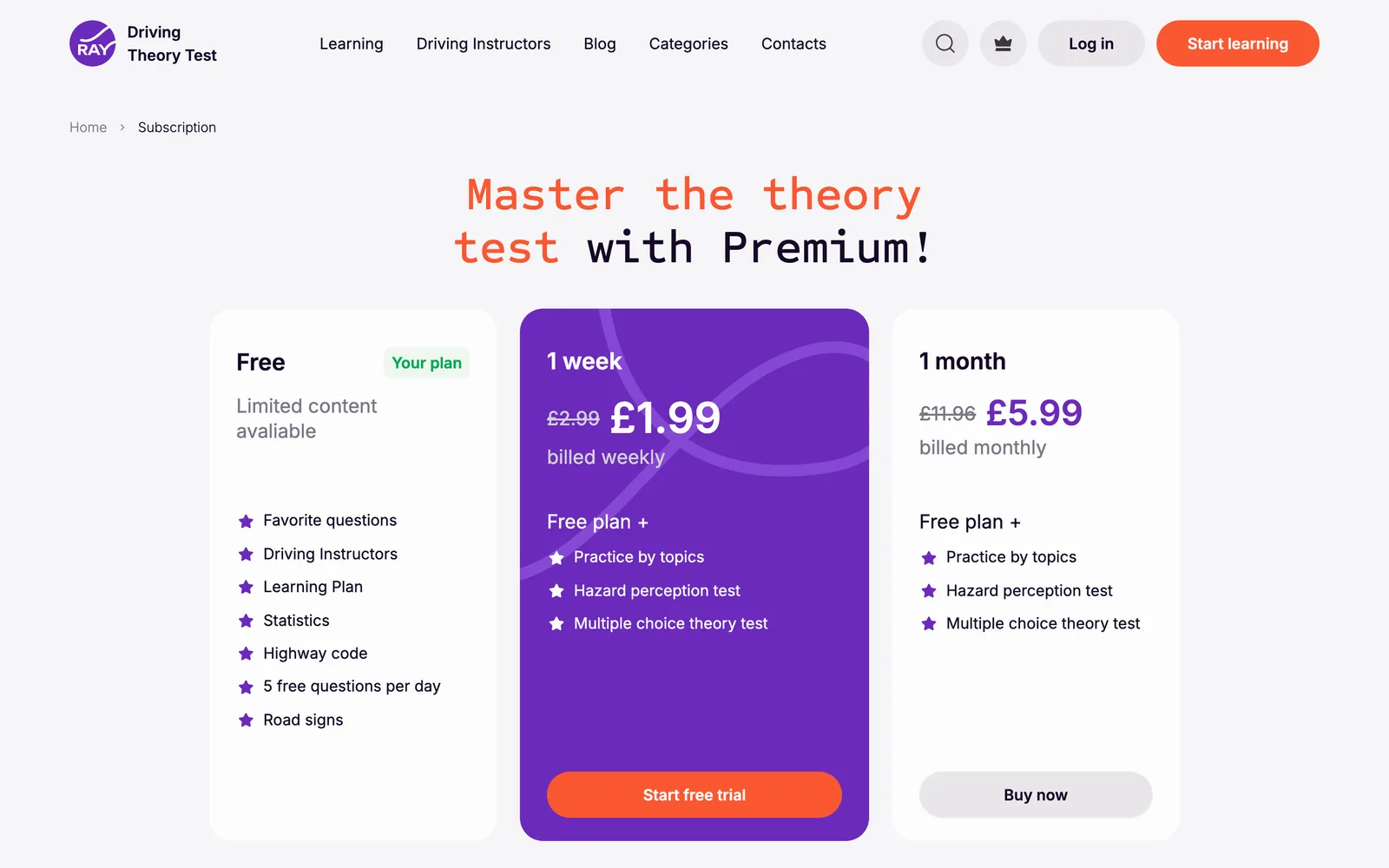
The product lived only in the app stores. I developed the strategy for taking the international product to the web as a second channel for acquisition and distribution, made the case for it inside the company and got it onto the roadmap for every international market. Ray went on to launch it along those lines, and the UK web product, with its own subscription plans, is live today.
Beyond the exam
Passing the theory test was where Ray's relationship with a learner driver ended, so I looked at what could come next. The CEO had proposed one startup idea; I analysed it, argued for a different direction, and the company adopted it as RayScore, with me as co-founder and CPO.
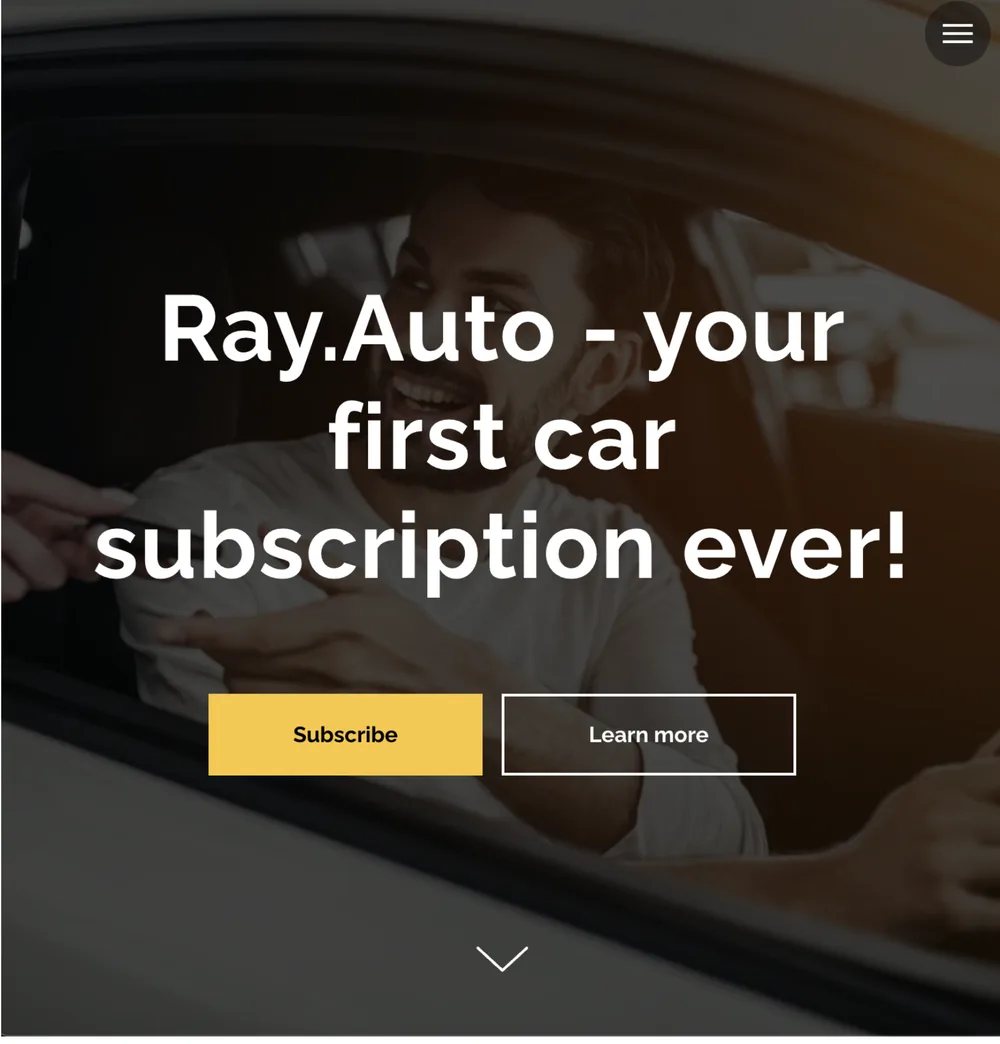
The idea was a fast lane from newbie to confident driver: score novice drivers on theory results, hazard perception and driving assessed with the app, and connect good drivers with car subscription, rental, leasing and insurance providers, who pay for qualified leads. We validated demand with Ray.Auto, a fake-door car-subscription page, which measured 3% conversion from the exam app and 2.38% conversion to a left email address. On that basis we built the forecast model and unit economics, and a 2023 roadmap from customer research and partner agreements to an MVP.
Result
International revenue grew about 8× from Q1 2022 to Q1 2023 and, from Q4 2022, stayed above marketing spend as paid acquisition scaled.
The UK carried that growth: about 73% of international revenue by April 2023.
In Poland, purchase conversion grew about 12× and ARPU about 5× year over year.
The web strategy I developed was launched by Ray and is live in the UK. RayScore took Ray's thinking beyond exam preparation, from a validated fake-door test to a business model and a roadmap.