Chief Product Officer
HyperSpace
I joined HyperSpace as CPO to improve monetization and found a company that first had to become operable. I took control of spend, rebuilt how product and engineering worked, replaced engineering leadership and stabilised production, then used the new system to run experiments. The strongest, Energy, showed roughly 2× retention-curve AUC in a web A/B test.
Constraint
Production was unstable and hard to diagnose, delivery was chaotic and spend was uncontrolled, so no monetization experiment could be trusted
Key decisions
Make the company operable before optimising monetization: control spend, structure delivery, and stabilise and instrument production.
Outcome
~2× retention-curve AUC with Energy in a web A/B test · documented non-payroll costs cut ~74%
Context
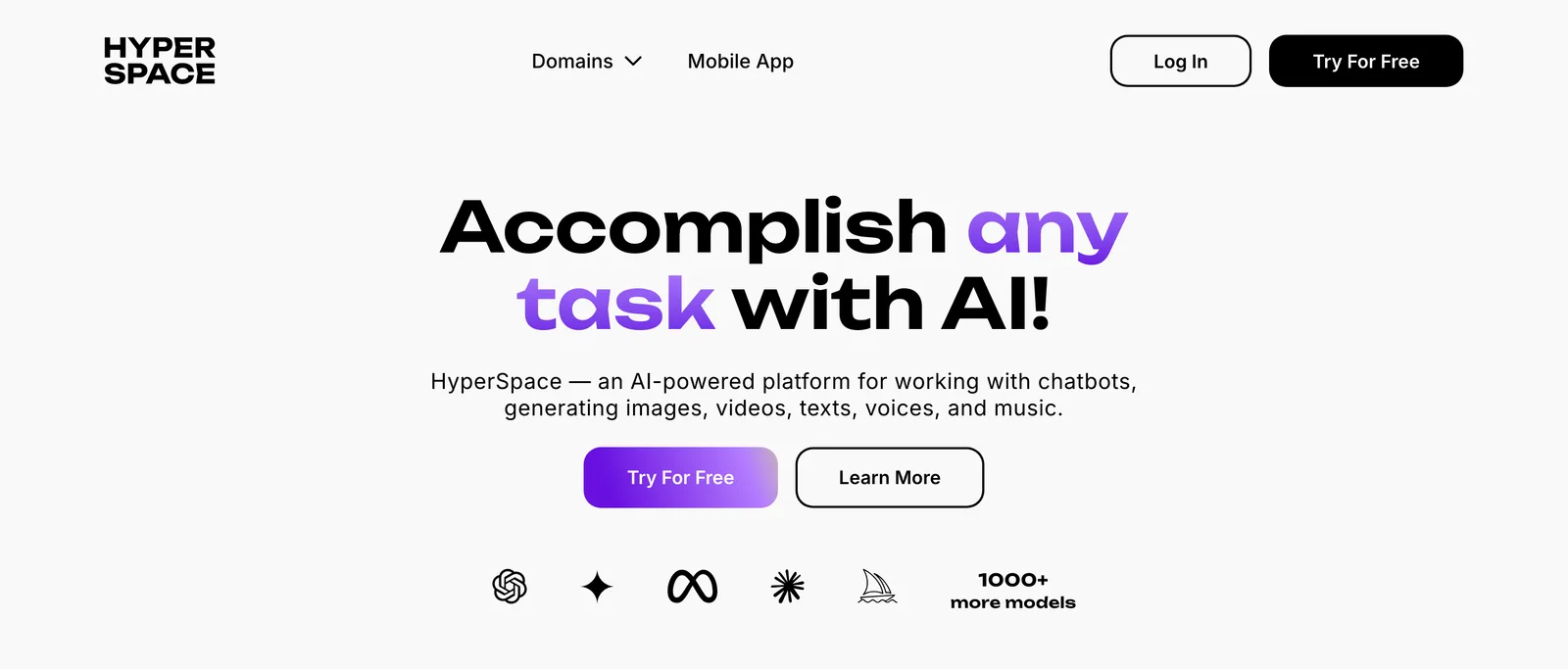
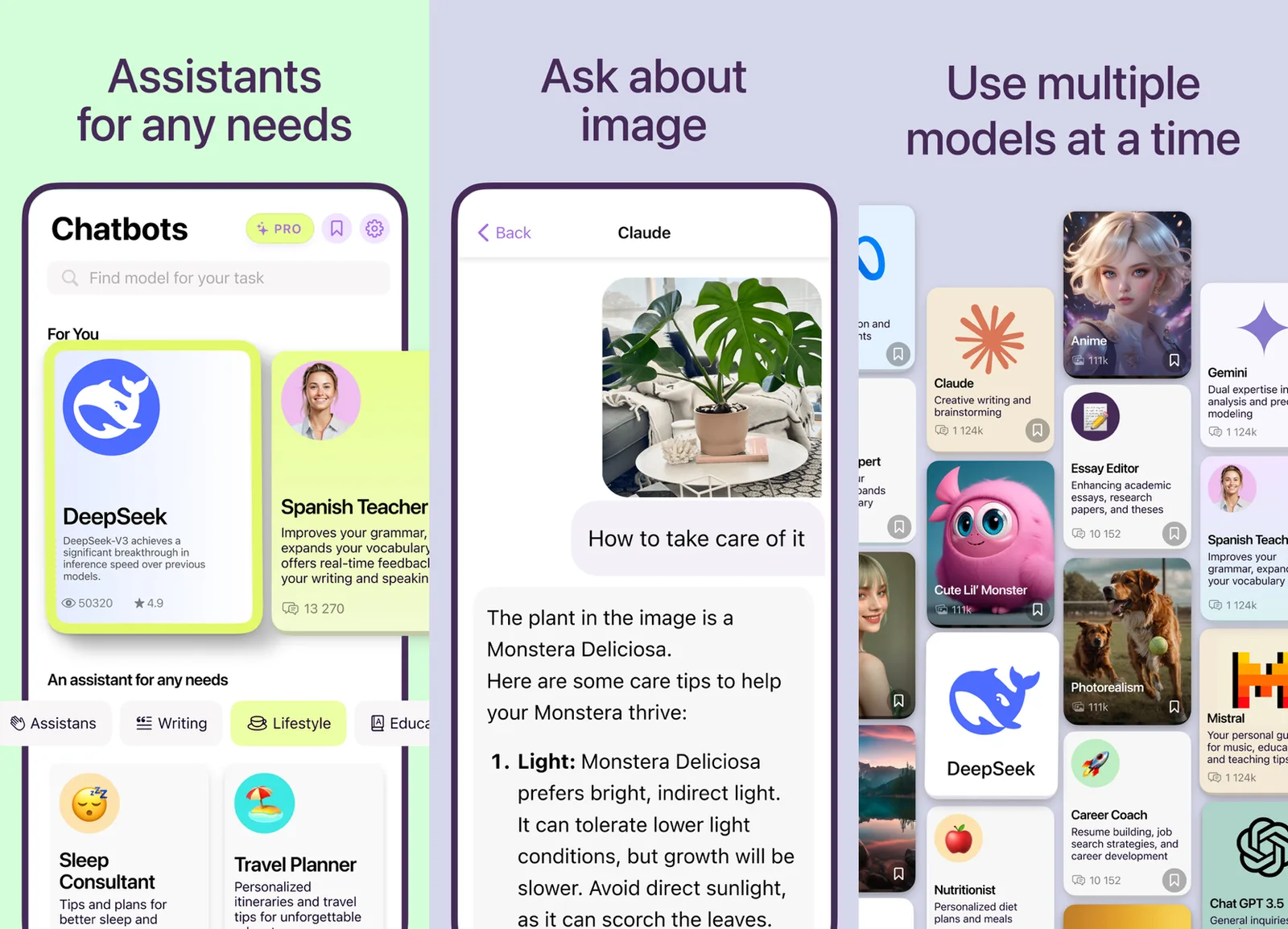
HyperSpace is an all-in-one AI platform: one subscription gives consumers a large catalogue of AI models and tools for chat, images, video, text, voice and music, on the web, iOS and Android. During my time the company chose and supplied every model itself, so it worked as a curated catalogue rather than an open marketplace.
The CEO invited me to join as Chief Product Officer in September 2024, when the company had been building the product for more than a year. The brief was monetization: the product was said to work, but it earned too little, and the company wanted better experimentation and optimisation.
The constraint
What looked like a monetization problem was an operating problem. Production failed again and again, sometimes without the team noticing, and often nobody could say where or why. Logging and product analytics were too thin to diagnose failures or explain what users did. Work arrived ad hoc, priorities changed before the last idea had been tested, and hypotheses meant to be critical took one to several months to reach users. The company also paid for services and tools it barely used, and the funding horizon communicated when I joined was about six months.
Monetization experiments on top of that would have measured noise. Before growth could be optimised, the product had to become operable.
My role
As CPO I owned the product and the way it was built, and in practice the P&L as well: costs, unit economics and the spending picture I brought to the CEO. I led the change of engineering leadership and worked with the new CTO on stabilising production.
Key decisions
Make the company operable before optimising monetization: control spend, structure delivery, and stabilise and instrument production.
Build a P&L and cut every cost that did not serve the product, to give the turnaround time.
Replace chaotic, month-long work with two-week delivery, one shared system and clear owners.
Change engineering leadership when process alone could not fix delivery and stability.
Turn the catalogue into a guided product, starting from what each user wants to do.
Judge product bets by controlled experiments, starting with Energy.
Restoring financial control
There was no P&L anyone used to run the business, so I built one and kept it: every recurring cost, what it bought, and the unit economics behind it, reviewed with the CEO. It exposed subscriptions and services nobody meaningfully used and marketing spend that did not pay back. We cut them along with other avoidable operating costs, and the later change in engineering leadership reduced burn as well.
Documented non-payroll operating costs fell by about three quarters: the monthly average from September 2024 to February 2025 was about 74% below the three months before I joined. HyperSpace was financed in stages by its lead investor rather than from one fixed cash balance. Measured against the roughly six-month horizon the CEO communicated when I joined, the lower burn stretched the company's effective operating horizon to about a year.
Documented non-payroll operating costs
- Jun–Aug 2024 · before I joined: 100
- Sep 2024 – Feb 2025: 26
Relative values from HyperSpace's monthly management reports. Absolute amounts are not shown.
Rebuilding delivery
The team was small and fragmented: developers who were full-stack in name but worked mostly on the backend, a CTO who also built features, a part-time frontend developer and contracted mobile development. Nobody had a shared picture of what was being built, by whom, or when it would be done.
I moved all work into Jira and onto two-week sprints. Large hypotheses were broken down until they fitted a sprint, every piece had an owner, and each sprint ended with a review of what had shipped and what to change. The monthly demo stayed as the reporting layer above the sprints. The tools mattered less than the effect: work became visible, broken down and owned, and the team stopped abandoning ideas before they had been tested.
Process could not fix engineering on its own. It needed technical ownership, a business rationale for its priorities and a plan for stability. I pushed for a change of engineering leadership, already had a candidate who could take over, and replaced the CTO.
Making production observable
With the new CTO we set a technical stabilisation plan. We introduced Sentry, logs and alerts, instrumented errors in the product analytics, and then worked through the technical bottlenecks the new visibility exposed.
Daily failures stopped being normal. The service no longer went down day after day, and incidents that did happen were found and fixed much faster. The instrumentation also paid off in specific places: it exposed a failure in Sign in with Apple, whose errors fell to zero once it was fixed, and user-facing errors fell by about 30% from March to April 2025.
From catalogue to product
Getting product analytics right took time: Amplitude events across web and mobile, then Adjust for attribution. Once the data could be trusted, it showed what the catalogue hid. Each user touched only a small part of a very large model library, most of it irrelevant to them, and many did not know what to do next. A thousand models did not add up to a user journey, and production instability made weak retention worse.
That set the direction: understand what a person wants to accomplish and guide them to the capabilities that fit, instead of an undifferentiated wall of models. The first step was a new web onboarding that asked about users' interests. It produced the first purchases made directly inside onboarding and became the platform for the experiments that followed, across onboarding, subscription funnels, App Store assets, attribution and web and mobile monetization.
A new usage economy
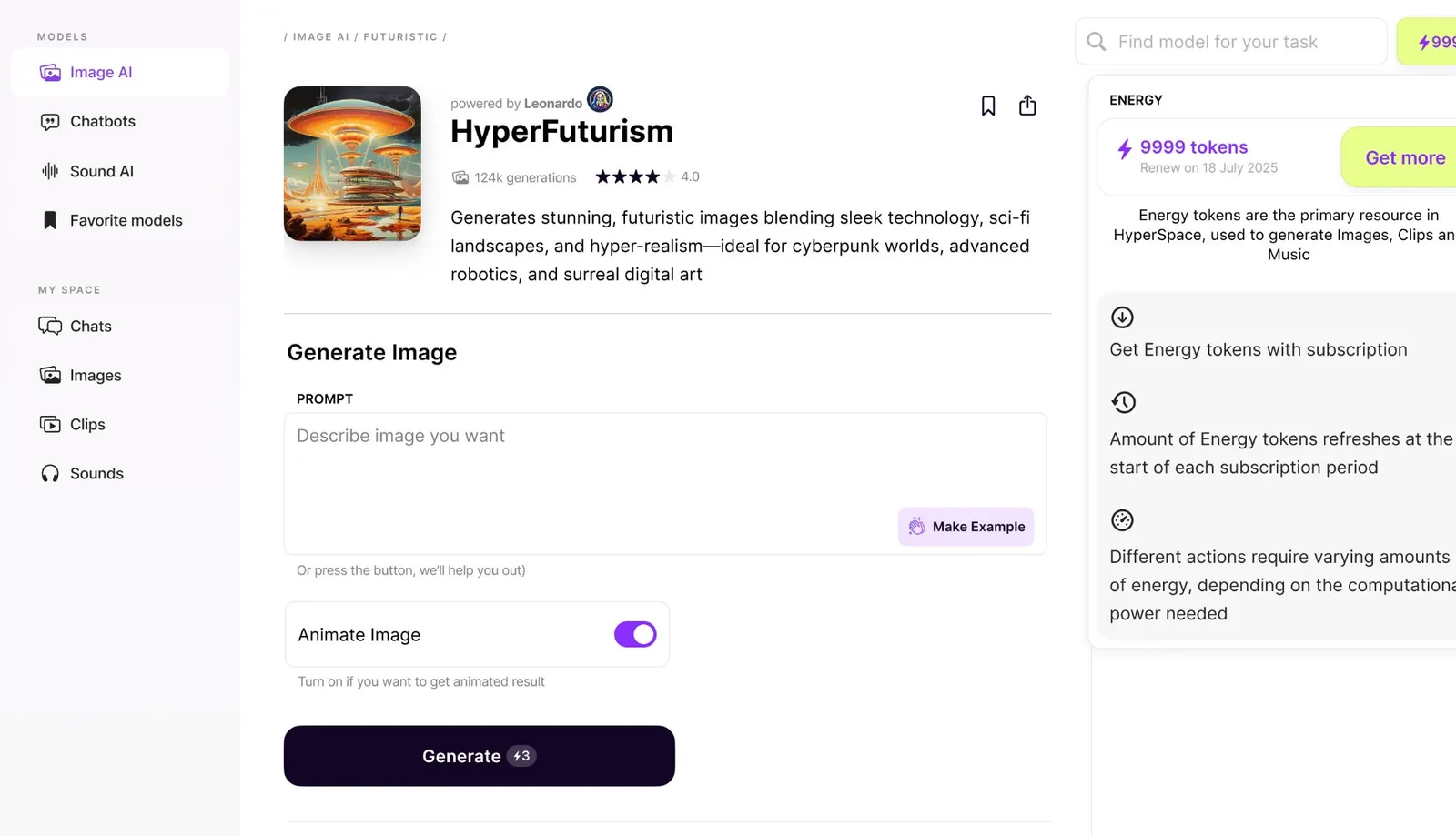
Energy was a hypothesis the CEO proposed around the time I joined, and I backed it as a foundation for further experiments. It changed how the subscription worked: a subscription came with a balance of Energy credits that refreshed each billing period, and each generation spent credits according to the compute it needed. One usage economy now covered very different AI capabilities, from images to clips and music.
In the delivery system I inherited, a feature like this took months rather than weeks, which is much of why the operating work mattered. Once Energy was live on the web, we ran it as an A/B test. Users with Energy showed a retention-curve area under the curve of 26.34%, against 13.13% for users without it: 13.2 percentage points higher, about twice as much.
Retention-curve AUC · web A/B test
- Web users without Energy: 13.13%
- Web users with Energy: 26.34%
From HyperSpace's May 2025 product report.
How it ended
The turnaround cut burn, stabilised the product and gave HyperSpace a way of building that could measure what it shipped. It did not make the company self-sustaining before its funding ran out. HyperSpace depended on staged financing from its lead investor, and in summer 2025 the bridge financing it needed did not come together. Active development was frozen, most of the team was released, and one developer kept the product running. My time there ended in September 2025. HyperSpace remains live today.
Result
In a web A/B test, users with Energy showed about 2× the retention-curve AUC of users without it: 26.34% vs 13.13%.
Documented non-payroll operating costs fell by about 74%. Against the roughly six-month funding horizon communicated when I joined, lower burn stretched the effective operating horizon to about a year.
Production went from failing day after day to a monitored service with Sentry, logs and alerts, and incidents were found and fixed much faster.
Product development moved from ad hoc, month-long work to two-week sprints with clear ownership, under new engineering leadership.
What I took from it
A monetization brief can hide an operating problem. Experiments mean something only once the product stays up, the data can be trusted and the team can ship a hypothesis in weeks, so that was the order of the work.